



The development of the system Your transactions Market advantage through central principles
The formation of market prices resulting from the emotional dynamics and intensity of the interaction of market participants - their perceptions, their mentality and their basic principles. These qualitative factors are difficult to quantify. This is certainly one of the reasons why many trading systems based solely on quantitative factors. However, it is precisely the integration of quantitative and qualitative factors leads to achieving a long-term stable and highly profitable development. Look for success through specialization.
"Many traders and investors once went as far as wanting to develop their own trading system. In developing the system only a few take into account the basic psychology of market participants. The formation of market prices resulting from supply and demand - because of perceptions of psychological situation and the underlying assumptions of the participants. The emotional dynamics of the interaction of buyers and sellers determine when the price will stop or when and with what force will move in a certain direction. With the help of specific formations in the graph, similar to a footprint footprinting can be recognized this dynamic (Visual Pattern Recognition = OCR formations). As all markets are subject to the dynamics of buyers and sellers, we find the same form in different time frames (eg 15 minute chart or daily chart) and different markets (Forex, indices, equities, commodities, etc.). The markets may be considered as fractal. A trading system based on the recognition of formations should operate reliably in multiple time frames and in different markets.
The basic principles as a decisive basis
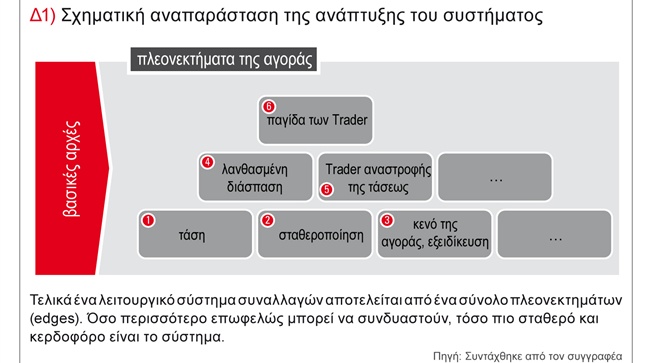
A trading system is always based on specific beliefs. It may well be that the creators of the systems are not fully aware of them. The most profitable trading systems, which create a long-term stable income, based on a strong set of principles. Because only when you know how they think market participants and how they act in some cases, you can develop a profitable and consistent trading system. It does not matter if the execution of transactions is fully automated or if based on the discretion of the author. Actually they are negotiating ideas (or low-risk ideas) which simultaneously exhibit a low risk profile and high profit potential. These are usually very profitable market positions that are not easily found with the passage of time show a certain stability. A trading system based on one or more trading ideas should generate long-term positive expected value and successfully addressing short-term downturns. The system should be aimed at identifying as many advantages on the market (so-called edge) and turning them into profits. Find Edges more integrated into the system, the better will be the performance (see Figure 1). Performance can be described by the rate of profit, the average expected value of profits, the volatility of individual expected values and the number of opportunities for transactions per year. A typical calculation to determine the size of the system performance may be the SQN-System Quality Number (see Infobox).
You may be wondering why all this effort to a start from the basic conditions? Ultimately it is very easy with today's technology to synthesize a set of a series of traditional, freely available, technical indicators. For example the combination of the technical indicator MACD (moving average convergence / divergence) with mobile medium Crossover looks promising. Also all the technical indicators Broker can easily be controlled statistically (back test) and to optimize the period examined. By this method you can quickly find profitable correlations. However they do not have a life. They work mostly only optimized back test. The reason for this is that these correlations do not represent causal and qualitative affinities. These arise by reason alone of the basic principles. In addition, the following questions should be: Can such a simple and purely quantitative approach to really lead to success; Should not the mass writing losses so few others to absorb profits from capital;
System development using
Specific examples
Many systems rely solely on quantitative factors. The psychological dynamics of market participants disregarded in this way. However, are these qualitative factors -vasismenoi on strengths and weaknesses of the participants - that are important for long-term and stable development of the system's profits. How is it possible to incorporate both qualitative and quantitative data in one system; The following example shows how starting from the basic principles, supported each other, they can identify market advantages (Market-Edges). These allow a qualitative description of the development of transactions in the system.
A) Basic principles and determination
market advantages
1) Market trends often continue longer than imagining market operators Advantage 1: Has developed a trading system which follows the voltage (voltage monitor)
2) stabilizations (consolidation) price within a voltage are short rest intervals (called Refresher). These are required so that the tendency to regain forces can continue. Advantage 2: Look for opportunities to enter the voltage only when a stabilization has taken place.
3) The '' mass '' in the capital market is mostly wrong and therefore no loss, only a few have been successful. Advantage 3: Seek input opportunities where the entry appears counter-intuitive (niche).
4) The price breakdown is popular in most of the market participants. It is easy to recognize and seem reasonable (statistically most disruptions fail) Advantage 4: Find a strategy that wins from incorrect splits.
5) Many Trader do trades against the trend, are emotional and mostly lose (transactions towards the voltage is boring). Advantage 5: Find such situations where the trader trading against the trend '' burn their fingers '' and go there with the trend. The strongest and most reliable movements arise where market players are caught unprepared (so called traps = traps) and are forced to close their positions at a loss, thus leading prices upward. Advantage 6: Find the situations that cause great pain in many of the market participants. These are usually situations that seem very '' safe '' but prices spin flash in red (trap trader).
B) System Features
transactions and possible implementation ideas.
Based on the above advantages can now be described qualitatively the system under different characteristics:
1. Type: system follows the trend (transactions based on voltage)
2. Environment: admission after a stabilization (contraction Volatility = volatility contraction)
3. Rationale: The strategy does not follow the understanding of the "mass", but is rather counter-intuitive
4. Strategy: management of false divisions (identification of situations where divisions fail with high probability)
5. The opposite side: Trader transactions contrary to the trend
6. Input: trap trader (Open a position when the traders who are opposed to the trend forced to go)
This description is based on the logical causal links. The logic of the basic principles can be understood as a cornerstone of the business model '' Trading system ''. Only after this preliminary work has meaning specific design of the system (starting with the setup-input) through the search of the corresponding rules, which can be based on appropriate technical indicators and / or specific configurations. For each attribute description there is a wide range of design possibilities. A description of the system (see above) may develop a number of different systems. Here is the combination of rules based on indicators such as visual identification and the cluster (see Figure 2).
Read the rest of this article by clicking the following link:
http://traders-mag.gr/ebook/2015/07_08/index.html#16
Read the magazine for free by registering here:
http://www.traders-mag.gr/index.php/component/comprofiler/registers
"Many traders and investors once went as far as wanting to develop their own trading system. In developing the system only a few take into account the basic psychology of market participants. The formation of market prices resulting from supply and demand - because of perceptions of psychological situation and the underlying assumptions of the participants. The emotional dynamics of the interaction of buyers and sellers determine when the price will stop or when and with what force will move in a certain direction. With the help of specific formations in the graph, similar to a footprint footprinting can be recognized this dynamic (Visual Pattern Recognition = OCR formations). As all markets are subject to the dynamics of buyers and sellers, we find the same form in different time frames (eg 15 minute chart or daily chart) and different markets (Forex, indices, equities, commodities, etc.). The markets may be considered as fractal. A trading system based on the recognition of formations should operate reliably in multiple time frames and in different markets.
The basic principles as a decisive basis
A trading system is always based on specific beliefs. It may well be that the creators of the systems are not fully aware of them. The most profitable trading systems, which create a long-term stable income, based on a strong set of principles. Because only when you know how they think market participants and how they act in some cases, you can develop a profitable and consistent trading system. It does not matter if the execution of transactions is fully automated or if based on the discretion of the author. Actually they are negotiating ideas (or low-risk ideas) which simultaneously exhibit a low risk profile and high profit potential. These are usually very profitable market positions that are not easily found with the passage of time show a certain stability. A trading system based on one or more trading ideas should generate long-term positive expected value and successfully addressing short-term downturns. The system should be aimed at identifying as many advantages on the market (so-called edge) and turning them into profits. Find Edges more integrated into the system, the better will be the performance (see Figure 1). Performance can be described by the rate of profit, the average expected value of profits, the volatility of individual expected values and the number of opportunities for transactions per year. A typical calculation to determine the size of the system performance may be the SQN-System Quality Number (see Infobox).
You may be wondering why all this effort to a start from the basic conditions? Ultimately it is very easy with today's technology to synthesize a set of a series of traditional, freely available, technical indicators. For example the combination of the technical indicator MACD (moving average convergence / divergence) with mobile medium Crossover looks promising. Also all the technical indicators Broker can easily be controlled statistically (back test) and to optimize the period examined. By this method you can quickly find profitable correlations. However they do not have a life. They work mostly only optimized back test. The reason for this is that these correlations do not represent causal and qualitative affinities. These arise by reason alone of the basic principles. In addition, the following questions should be: Can such a simple and purely quantitative approach to really lead to success; Should not the mass writing losses so few others to absorb profits from capital;
System development using
Specific examples
Many systems rely solely on quantitative factors. The psychological dynamics of market participants disregarded in this way. However, are these qualitative factors -vasismenoi on strengths and weaknesses of the participants - that are important for long-term and stable development of the system's profits. How is it possible to incorporate both qualitative and quantitative data in one system; The following example shows how starting from the basic principles, supported each other, they can identify market advantages (Market-Edges). These allow a qualitative description of the development of transactions in the system.
A) Basic principles and determination
market advantages
1) Market trends often continue longer than imagining market operators Advantage 1: Has developed a trading system which follows the voltage (voltage monitor)
2) stabilizations (consolidation) price within a voltage are short rest intervals (called Refresher). These are required so that the tendency to regain forces can continue. Advantage 2: Look for opportunities to enter the voltage only when a stabilization has taken place.
3) The '' mass '' in the capital market is mostly wrong and therefore no loss, only a few have been successful. Advantage 3: Seek input opportunities where the entry appears counter-intuitive (niche).
4) The price breakdown is popular in most of the market participants. It is easy to recognize and seem reasonable (statistically most disruptions fail) Advantage 4: Find a strategy that wins from incorrect splits.
5) Many Trader do trades against the trend, are emotional and mostly lose (transactions towards the voltage is boring). Advantage 5: Find such situations where the trader trading against the trend '' burn their fingers '' and go there with the trend. The strongest and most reliable movements arise where market players are caught unprepared (so called traps = traps) and are forced to close their positions at a loss, thus leading prices upward. Advantage 6: Find the situations that cause great pain in many of the market participants. These are usually situations that seem very '' safe '' but prices spin flash in red (trap trader).
B) System Features
transactions and possible implementation ideas.
Based on the above advantages can now be described qualitatively the system under different characteristics:
1. Type: system follows the trend (transactions based on voltage)
2. Environment: admission after a stabilization (contraction Volatility = volatility contraction)
3. Rationale: The strategy does not follow the understanding of the "mass", but is rather counter-intuitive
4. Strategy: management of false divisions (identification of situations where divisions fail with high probability)
5. The opposite side: Trader transactions contrary to the trend
6. Input: trap trader (Open a position when the traders who are opposed to the trend forced to go)
This description is based on the logical causal links. The logic of the basic principles can be understood as a cornerstone of the business model '' Trading system ''. Only after this preliminary work has meaning specific design of the system (starting with the setup-input) through the search of the corresponding rules, which can be based on appropriate technical indicators and / or specific configurations. For each attribute description there is a wide range of design possibilities. A description of the system (see above) may develop a number of different systems. Here is the combination of rules based on indicators such as visual identification and the cluster (see Figure 2).
Read the rest of this article by clicking the following link:
http://traders-mag.gr/ebook/2015/07_08/index.html#16
Read the magazine for free by registering here:
http://www.traders-mag.gr/index.php/component/comprofiler/registers