



Malaysian Airlines MH370: ocean debris 'may have sunk'
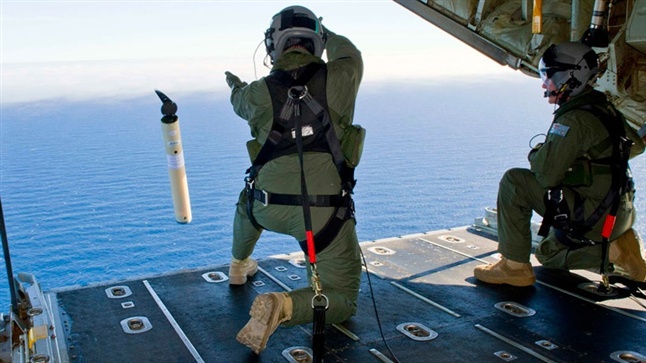
Source : http://edition.cnn.com/
Washington (CNN) -- Somewhere in the vast Indian Ocean, a tiny aluminum cylinder may be emitting a steady ping.
The ping itself is unremarkable, says Anish Patel, president of beacon manufacturer Dukane Seacom Inc. Patel snaps his fingers to match the pinger's rate -- one snap per second. In fact, it is inaudible to human ears.
But the whole world is listening. And the ping is taking on the cadence of a slowly failing clock.
Friday marks the 14th day of the hunt for Malaysia Airlines Flight 370, and near the halfway mark in the pinger's minimum battery life. When the battery dies, possibly around April 6, the job of finding the flight data and cockpit voice recorders will get significantly harder. And so will the job of solving the mystery of Flight 370.
Bill Nye: We will find Flight 370 How do ocean recoveries work? New video shows search for Flight 370
A beacon of hope
Every commercial airplane is required to have pingers -- technically called underwater locator beacons -- to help locate lost aircraft. One is attached to the flight data recorder; another to the cockpit voice recorder. Find the pingers and you find the recorders. Find the recorders, experts say, and you solve the mystery of Flight 370.
But, like virtually everything in aviation, the current technology represents one step in an evolutionary path. Today's recorders are better than recorders of the past, when data was recorded on magnetic tape. But they fall short of current technical potential, with short battery lives and -- on voice recorders -- only two hours of recording capacity.
Since Flight 370 flew almost seven hours beyond the point where something went terribly wrong, it's almost guaranteed that crucial cockpit sounds have been erased.
On the positive side, the depletion of the battery will not wipe out data. Data has been known to survive years in harsh sea water conditions on modern recorders.
Washington (CNN) -- Somewhere in the vast Indian Ocean, a tiny aluminum cylinder may be emitting a steady ping.
The ping itself is unremarkable, says Anish Patel, president of beacon manufacturer Dukane Seacom Inc. Patel snaps his fingers to match the pinger's rate -- one snap per second. In fact, it is inaudible to human ears.
But the whole world is listening. And the ping is taking on the cadence of a slowly failing clock.
Friday marks the 14th day of the hunt for Malaysia Airlines Flight 370, and near the halfway mark in the pinger's minimum battery life. When the battery dies, possibly around April 6, the job of finding the flight data and cockpit voice recorders will get significantly harder. And so will the job of solving the mystery of Flight 370.
Bill Nye: We will find Flight 370 How do ocean recoveries work? New video shows search for Flight 370
A beacon of hope
Every commercial airplane is required to have pingers -- technically called underwater locator beacons -- to help locate lost aircraft. One is attached to the flight data recorder; another to the cockpit voice recorder. Find the pingers and you find the recorders. Find the recorders, experts say, and you solve the mystery of Flight 370.
But, like virtually everything in aviation, the current technology represents one step in an evolutionary path. Today's recorders are better than recorders of the past, when data was recorded on magnetic tape. But they fall short of current technical potential, with short battery lives and -- on voice recorders -- only two hours of recording capacity.
Since Flight 370 flew almost seven hours beyond the point where something went terribly wrong, it's almost guaranteed that crucial cockpit sounds have been erased.
On the positive side, the depletion of the battery will not wipe out data. Data has been known to survive years in harsh sea water conditions on modern recorders.